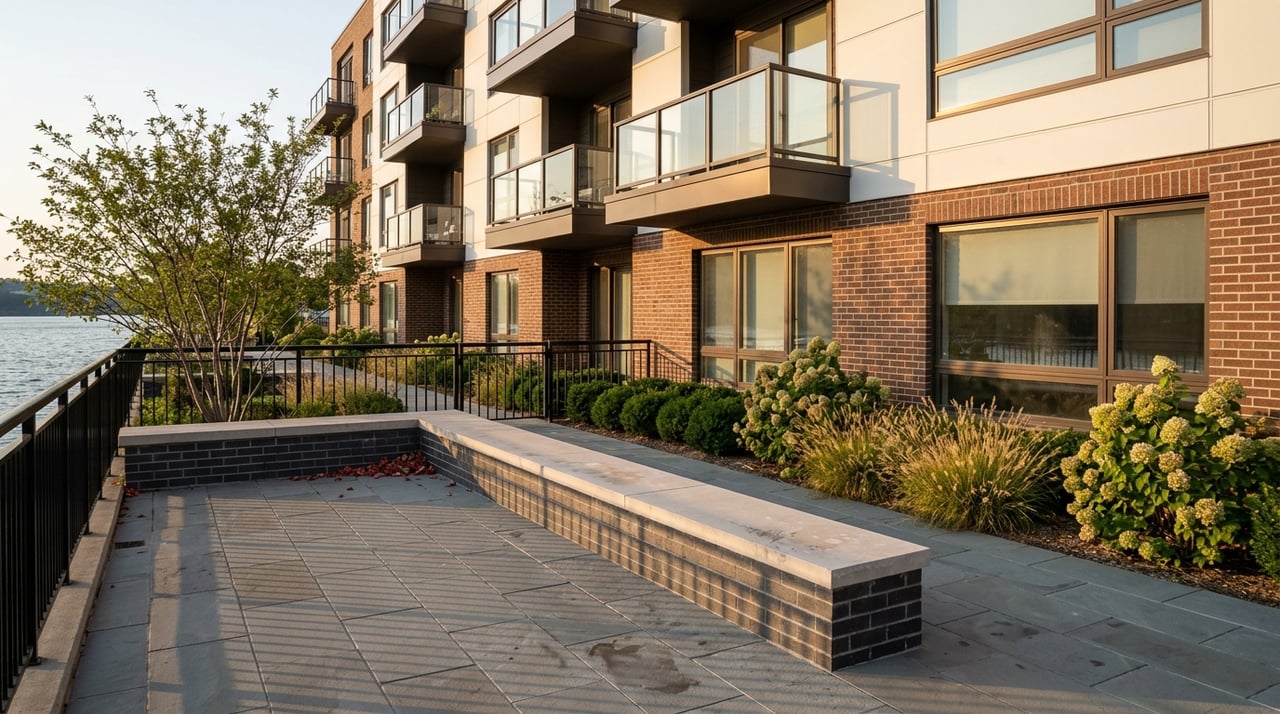
If you are drawn to Nyack’s riverfront lifestyle, it is easy to assume a waterfront condo or co-op will be the simple, low-maintenance answer. Sometimes it is, but not always. If you are considering a purchase along the Hudson in Nyack, understanding how these properties work can help you compare costs, rules, financing, and risk with much more confidence. Let’s dive in.
Why Nyack waterfront homes stand out
Nyack offers a different feel than many suburban markets. Official village planning documents describe it as a compact, walkable Hudson River community with a historic downtown, shoreline park, marina, and ongoing work to better connect the waterfront, Memorial Park, and downtown.
That local setting shapes the condo and co-op experience. In Nyack, waterfront housing may feel more like village-scale living, with low-rise or mid-rise buildings and proximity to parks, shops, and river access, rather than large suburban-style complexes. For many buyers, that is a big part of the appeal.
Transit access is also part of the story. The village transportation page notes several mass transit options, and Rockland County transit connections link riders to broader regional systems. If you want a home that supports commuting flexibility without the upkeep of a detached house, that can make waterfront ownership in Nyack especially attractive.
Condo vs. co-op ownership
The biggest difference comes down to what you actually own. In New York, a condo owner holds title to the individual unit and also owns an undivided interest in the building’s common elements. A co-op owner, by contrast, buys shares in a corporation that are tied to a specific apartment and receives a proprietary lease for that home.
That legal difference affects how the purchase feels in real life. Condos are generally more familiar to buyers because they are deeded real estate. Co-ops usually involve a more corporate structure, with building rules, financial review, and board oversight playing a larger role.
What condo ownership means
With a condo, you own your unit directly. The New York Attorney General explains that condo fees often help cover exterior maintenance, common areas, and some shared services or amenities.
That can be appealing if you want less day-to-day upkeep. Still, lower-maintenance does not mean maintenance-free. In a waterfront building, exterior systems, common areas, and weather-related wear can still affect your costs through monthly fees, reserves, or special assessments.
What co-op ownership means
With a co-op, you are not buying real property in the same way you would with a condo. You are buying shares in the corporation that owns the building, and those shares give you the right to occupy a specific apartment through a proprietary lease.
The New York Attorney General also notes that co-op owners pay maintenance charges based on the number of shares assigned to their apartment. In practice, that means your monthly cost structure and approval process may look quite different from a condo purchase.
Why the difference matters to buyers
For many Nyack buyers, the condo versus co-op question is not just about vocabulary. It affects financing, monthly carrying costs, building rules, future flexibility, and how much scrutiny the building itself receives during the transaction.
A condo may offer a more straightforward ownership structure. A co-op may come with more building-level review and more oversight from the corporation or board. Neither is automatically better. The right fit depends on your goals, budget, and comfort with the building’s rules and financial picture.
Review the building, not just the unit
One of the biggest mistakes buyers make is falling in love with the view and overlooking the building itself. The New York Attorney General recommends reading the full offering plan and consulting an attorney before signing because the offering plan governs sponsor obligations and promised features.
That matters if a building advertises things like parking, recreational areas, or other shared elements. What is promised on paper, what exists today, and what is actually maintained can be different questions. You want those answers early.
Documents worth reviewing
For an existing condo or co-op, buyers should look beyond finishes and square footage. The Attorney General advises reviewing:
- Board minutes
- Financial reports
- Local building records
- The offering plan and governing documents
These materials can reveal repair history, recurring issues, and likely future costs. They can also help you understand whether the building has been proactive or reactive about maintenance.
Repairs that can affect your budget
According to the Attorney General, major recurring repair issues in condos and co-ops can include:
- Facade defects
- Roof work
- Elevator work
- Plumbing upgrades
- Electrical upgrades
- Boiler replacement
- Significant cosmetic work
Those items matter in any shared building, but they can be especially important near the waterfront. Exposure to weather and exterior conditions can make building upkeep a more central part of the ownership equation.
Waterfront buying in Nyack needs extra due diligence
Nyack’s waterfront planning is explicitly focused on resilience. The village’s updated Local Waterfront Revitalization Program addresses flooding, sea-level rise, protection of built and natural resources, and long-term waterfront access.
That is helpful context for buyers because it shows the waterfront conversation is not only about scenery. It is also about infrastructure, public access, long-range planning, and ongoing maintenance needs.
Check flood exposure early
If you are considering a waterfront or water-adjacent unit, check flood exposure as early as possible. FEMA identifies its Flood Map Service Center as the official place to review flood maps, and it notes that a high-risk flood zone generally has a 1% annual chance of flooding.
This step matters for both peace of mind and budgeting. Lenders may require flood insurance depending on the location, and FEMA notes that most homeowners policies do not cover flood damage. Even outside high-risk zones, flood insurance may still be available and worth discussing.
Add flood costs to your real budget
When buyers compare a condo or co-op to a house, they often focus on the list price and monthly fee. On the waterfront, that is not enough. You should also factor in possible flood insurance requirements, the building’s insurance structure, reserve strength, and any signs of deferred maintenance.
A low-maintenance lifestyle can still come with shared financial exposure. If the building needs major work, owners may feel it through higher fees, special assessments, or added lending challenges.
Financing can hinge on the whole project
Financing for a condo is not always just about your income and credit. HUD notes that condo approval considers project-level issues such as insurance coverage, financial condition, title, pending legal action, and physical condition.
Fannie Mae also notes that problems like critical repairs, inadequate insurance, significant litigation, or hotel-style transient rental characteristics can affect loan eligibility. That means a strong buyer can still run into obstacles if the project itself does not meet lending standards.
Condo financing questions to ask
Before you get too far into a waterfront condo purchase, it helps to ask:
- Does the building appear to have adequate insurance?
- Are there major repairs in progress or coming soon?
- Is there pending litigation involving the building?
- Are reserves strong enough for expected upkeep?
- Does the project have any use patterns that could complicate financing?
These are not small details. They can shape your approval timeline, your closing costs, and even whether certain financing options are available.
Co-op financing works differently
For co-ops, Fannie Mae explains that share loans finance your ownership interest in the corporation along with your occupancy rights. Lenders may also review the co-op’s budget or, if the budget is unavailable, the corporation’s audited financials or tax returns to evaluate financial strength.
There is another practical point for buyers considering flexibility. Fannie Mae notes that investment properties are not allowed for co-op share loans sold to it. If you are hoping to use a riverfront unit primarily as a rental, that limitation is worth understanding before you start shopping.
A smart Nyack waterfront checklist
If you are comparing waterfront condos and co-ops in Nyack, keep your process simple and disciplined. Focus on the unit, the building, and the location at the same time.
Here is a practical checklist to use:
- Confirm whether the property is a condo or a co-op
- Review monthly charges and what they cover
- Read the offering plan and governing documents carefully
- Review board minutes and financial statements
- Ask about reserves, recent repairs, and planned capital work
- Check flood map status early in the process
- Understand insurance requirements and possible flood coverage needs
- Ask whether building conditions could affect financing
- Clarify any occupancy, rental, or use restrictions
This kind of step-by-step review is especially helpful in Nyack, where the waterfront lifestyle can be very appealing and the housing stock may feel distinct from more conventional suburban inventory. A beautiful setting is a real asset, but the numbers and documents still need to support the decision.
How to choose the right fit
If you want more traditional real property ownership, a condo may feel more straightforward. If you are comfortable with a share-based structure and building-level oversight, a co-op may still be a strong option depending on your goals.
The key is not to assume one is automatically easier, cheaper, or less risky. In Nyack, the right waterfront purchase is the one that matches your budget, financing path, lifestyle needs, and comfort with the building’s long-term condition.
A calm, thorough review usually leads to the best decision. When you understand the ownership structure, the building finances, and the waterfront-specific risks, you can move forward with much more clarity.
If you are weighing waterfront condos or co-ops in Nyack and want a clear, step-by-step strategy, Bobbie Procida can help you evaluate the options with a steady, informed approach.
FAQs
What is the difference between a Nyack condo and a Nyack co-op?
- A condo gives you title to the unit plus an interest in the common elements, while a co-op gives you shares in the corporation that owns the building and a proprietary lease for a specific apartment.
What do monthly fees usually cover in a Nyack condo building?
- According to New York Attorney General guidance, condo fees typically cover exterior upkeep, common areas, and some shared services or amenities, though the exact coverage varies by building.
What should buyers review before purchasing a Nyack co-op or condo?
- Buyers should review the offering plan, governing documents, board minutes, financial reports, and local building records to understand the building’s condition, obligations, and likely future costs.
Why do flood maps matter for Nyack waterfront condos and co-ops?
- Flood maps matter because waterfront or water-adjacent properties may face lender flood insurance requirements, and flood-related costs can affect your true monthly housing budget.
Can financing be harder for a Nyack waterfront condo or co-op?
- Yes. Financing can be affected by project-level issues such as inadequate insurance, significant litigation, deferred maintenance, critical repairs, or weak financials in the building.
Are Nyack waterfront condos and co-ops always lower maintenance than a house?
- They may reduce personal yard work and some exterior chores, but they do not eliminate building-level risk, shared repair costs, flood considerations, or the need to review reserves and insurance carefully.